
Introducing StrangeNotions.com – Reason, Faith, and Dialogue

I have some extremely exciting news that I've been keeping under wraps for some time, and this morning it finally came out. At 9:00am ET, I launched StrangeNotions.com, a major evangelistic project which was two years in the making.
 
StrangeNotions
 
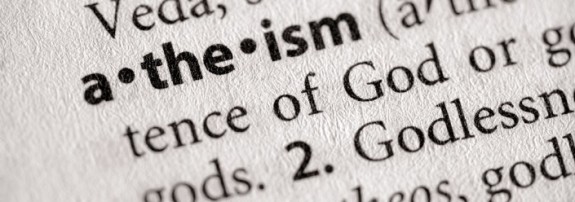
Strange Notions is designed to be the central place of dialogue between Catholics and atheists. One implicit goal is to bring non-Catholics to faith, especially followers of the so-called New Atheism. As a 'digital Areopagus', the site includes intelligent articles, compelling video, and rich discussion throughout its comment boxes.
 

(If you can't see the video above, click here.)
 
Strange Notions gets its name from St. Paul's speech at the Areopagus in Acts 17:16-34. There he proclaimed the Resurrection to the intellectual elite of the ancient world, who responded by saying, "you bring some strange notions to our ears; we should like to know what these things mean." StrangeNotions.com helps those asking the same thing today. Open-minded atheists will encounter reasonable arguments for God and his Church, maybe for the first time in their lives, and like St. Paul's listeners they’ll leave intrigued by these strange notions.

I've gathered several top Catholic minds to contribute to the site. Right now we have over 30 on board, including Dr. Peter Kreeft, Dr. Edward Feser, Fr. Robert Barron, Fr. Robert Spitzer, Dr. Benjamin Wiker, Dr. Christopher Kaczor, Dr. Kevin Vost, Christopher West, Jimmy Akin, Jennifer Fulwiler, Marc Barnes, Leah Libresco, Stacy Trascanos, Mark Shea, Carl Olson, and many more. The project has also received several great endorsements including these:
 

"Brandon Vogt is at the cutting edge of using the Internet and social media as a tool for evangelization...I believe that his latest endeavor, StrangeNotions.com, is an excellent example.”
— Bishop Christopher Coyne, Archdiocese of Indianapolis

"Brandon Vogt brings his energy, enthusiasm, and prodigious intellectual gifts to the Catholic conversation and demonstrates how social media can be used effectively to advance the mission of the Gospel."
— Fr. Robert Barron, founder of Word on Fire Catholic Ministries

 
This site is timely for several reasons:

  • On May 12 the Catholic Church around the world will celebrate World Communications Day. Pope Benedict XVI, shortly before he stepped down, composed this year's official message which he titled, "Social Networks: Portals of Truth and Faith: New Spaces for Evangelization." This project embodies that theme as it uses social networks as "new spaces" to evangelize.
  • Over the last ten years, the number of self-identified atheists in America has increased 500%. They're one of the country's fastest growing religious groups yet almost no Catholics engage them. Strange Notions is a frontier project in this needed effort.
  • In the midst of the Year of Faith and the New Evangelization, this is a creative example of using "new ardor, new methods, and new expressions" to evangelize.

Any way that you could cover the site, either with a blog post, an interview, or by sharing the video trailer would be a huge help.

If you have any questions, email me at contact@strangenotions.com. And please tell me what you think in the comment boxes!

(Video) Interview with Matt Fradd – On Pornography, Masculinity, and Atheism

Today I have the great pleasure of interviewing Matt Fradd. Matt was born in Australia—hence the wicked accent which makes him sound 36% more intelligent—but now lives and works in San Diego, California for the well-known apostolate, Catholic Answers.

Matt FraddAs a Catholic apologist, Matt helps people discover the beauty and truth of Catholicism. His strongest passion is to help atheists come to faith. He's written many blog posts about atheism and has a forthcoming booklet on the topic.

Matt also travels the country speaking about pornography, masculinity, and chastity. One of his most popular talks is called "The Man Talk" which helps men live authentically masculine lives. Another talk, "Taking Down Goliath," helps men escape pornography addiction. To that end, Matt also launched a website called The Porn Effect in order to undermine the pornography culture.

In our interview today, Matt and I discuss many of these favorite topics including authentic manhood, how men can become free from pornography, and how Catholics should respond to the most popular atheist arguments.
 

Watch or download our interview below:


Video


Watch the video here (30 minutes)
 

Audio

Audio clip: Adobe Flash Player (version 9 or above) is required to play this audio clip. Download the latest version here. You also need to have JavaScript enabled in your browser.

Download the interview here (30 minutes)
 

Topics Discussed:

1:12 - Why is pornography so dangerous?
3:54 - How can men overcome pornography addiction?
5:33 - 1. Admit you have a problem.
5:54 - 2. Prayer and fasting.
7:05 - 3. Accountability.
8:13 - 4. Be open to counseling.
10:04 - 5. Forgive ourselves.
12:39 - How does secular masculinity differ from Catholic masculinity?
16:28 - What's the most common argument for atheism?
19:45 - How do you respond to the problem of evil?
22:20 - What is Pascal's Wager and why is it so powerful?
 

Excerpt

Q: Why is pornography so dangerous to individuals and society?

 
Well, I like to start off by saying to people that the problem with pornography is not that it shows too much, but that it shows too little of the human person, that it reduces a human to the lowest common denominator. It teaches a man or a woman to think that a woman is but a collection of body parts for my amusement rather than a person to be loved.


Check out Matt's website, MattFradd.com and be sure to follow him on Facebook and Twitter.

If you liked this discussion you'll find several more on my Interviews page. Subscribe free via feed reader or email and ensure sure you don't miss future interviews.

What do you think about Pascal's Wager?


My Favorite 15 Books of 2012 (#10-#6)

My Favorite Books of 2012

NOTE: Check out favorite books #15-#11 and #5-#1. You might also enjoy my favorite books from 2011 and 2010.
 

"The habit of reading is the only enjoyment in which there is no alloy; it lasts when all other pleasures fade." — Anthony Trollope

 
This was a relatively slow reading year for me. After knocking out 87 books last year and 108 two years ago, I only finished 54 titles this year. Granted, 2012 brought many wonderful diversions: our third child, Augustine, was born; I studied hundreds of hours for the Professional Engineering exam (which I passed!); I had several new writing and speaking commitments; and I worked on two large book projects. Considering all that activity I’m actually surprised I read as much as I did.
 
Yet 54 books still provide plenty of options for my annual favorites list. As with prior lists, these are my fifteen favorite books, not the most acclaimed, the most timeless, or the best-written. They're simply the ones I liked the most, the ones I kept thinking about well after finishing.
 
Only about half of these books were published in 2012. But as C.S. Lewis says, novelty isn't always good; newer books haven’t passed the test of time. Regardless, some of these older books may be unfamiliar to you and therefore “new” in the best sense of the word.
 
Also, this year I’m splitting the list up into three parts. The whole thing came ended up being 4,300 words which is way too long for a single post.
 
So with that, here are my favorite titles from 2012 (in descending order):
 

10. Answering the New Atheism: Dismantling Dawkins’ Case against God

Scott Hahn and Benjamin Wiker
(Emmaus Road, 2008)

 
Richard Dawkins is the de facto leader of the “New Atheism,” a strange breed of unbelief characterized by vicious, vulgar, and militant attacks on religion (mostly on Christianity, and especially on Catholicism.) In 2006, the Oxford biologist wrote his scathing book, The God Delusion. The book, a sacred text for New Atheists, is plagued by confused science, bad philosophy, and even worse theology.

10 - Answering the New AtheismDr. Scott Hahn and Dr. Benjamin Wiker are well aware of the book’s shoddy arguments. But they've troubled many of their otherwise well-formed students. So the two theology professors composed this book-length refutation, thus providing a definitive answer to the New Atheism.

The book argues against Dawkins from many angles. It covers St. Thomas’ famous cosmological proofs for God’s existence. It shows how objective morality, required for Dawkins to call religion “bad,” itself ultimately points to God. In the book’s strongest section, the co-authors point out several flaws in Dawkins’ understanding of Darwinian evolution—of which Dawkins is perhaps the world's most famous proponent—along with misunderstandings about probability and cosmological “fine-tuning.” They effectively show how evolution is not contradictory toward faith, and that using Darwinism to answer metaphysical questions is an ultimately futile pursuit.

Other books refute the New Atheists on higher intellectual grounds—I’m thinking of Dr. Ed Feser’s The Last Superstition: A Refutation of the New Atheism and David Bentley Hart’s Atheist Delusions: The Christian Revolution and Its Fashionable Enemies—but Answering the New Atheism is a fantastic popular-level primer.


9. Tolkien: Man and Myth, a Literary Life

Joseph Pearce
(Ignatius Press, 2001)

 
Acclaimed biographer Joseph Pearce begins profiling J.R.R. Tolkien by examining his early influences. Tolkien’s childhood years in the English countryside birthed a love for beauty, simplicity, and nature, all of which we see embodied in the idyllic Shire.

9 - TolkienLater, however, Tolkien was forced to move into an industrial, urban city. He hated it. The crashing machines, suffocating smoke, and cold architecture all grated against his desire for the quiet, country life. The experiences formed a lifelong distaste for technology, which we also see in his epic Lord of the Rings trilogy.

But it was Tolkien’s early conversion to Catholicism that most indelibly affected his writing. His faith gave him a deeply sacramental view of the world. It enabled him to see God in all things, sacred and secular. That's why he could describe his seemingly-secular Lord of the Rings trilogy as “a fundamentally religious and Catholic work,” even though it never mentions God, Christ, or the Church. Yet behind Tolkien's hobbits and dwarves, elves and wizards, lay many Catholic ideas. We see virtue, sacramental symbolism, and the constant hand of Providence, especially in the darkest moments. We also see grace building on nature, a specifically Catholic idea.

As both a Catholic and a literary Englishman, Pearce is the perfect guide to Tolkien’s faith-infused fiction. Most Tolkien biographies either skip his Catholicism or profoundly misunderstand it. Pearce gets it just right, and because of that his is my favorite biography of the Middle-Earth architect.


8. From Willow Creek to Sacred Heart: Rekindling My Love for Catholicism

Chris Haw
(Ave Maria Press, 2012)

 
From my earlier review:

From Willow Creek to Sacred HeartIn his new memoir, From Willow Creek to Sacred Heart: Rekindling My Love for Catholicism, Chris Haw recounts how he went from leading worship at one of the country’s largest megachurches, to protesting on behalf of the homeless and hungry, and finally to a crumbling Catholic parish in one of America’s darkest cities...

Sacred Heart Parish, in Camden, NJ, reawakened his childhood Catholicism. The liturgy’s paradoxical emphasis on the Cross and death, combined with his appreciation for Rene Girard and his “scapegoating” theology, ultimately drew him back in.

The book’s first half tracks Chris’ journey from megachurch evangelicalism to urban Catholicism. But in the second half, he offers profound meditations on themes like liturgy, violence, peace, death, and how to cope with the Church's institutional dysfunction.

From beginning to end, From Willow Creek to Sacred Heart is poetic, honest, and raw. It’s one of the most beautiful spiritual memoirs I've encountered, bearing the same mesmerizing glow as Dorothy Day’s Long Loneliness and Thomas Merton’s Seven Storey Mountain. If you liked those classic books, you'll enjoy this one.


7. Forming Intentional Disciples: The Path to Knowing and Following Jesus

Sherry Weddell
(Our Sunday Visitor, 2012)

 
When reading anything about the New Evangelization, whether it be from the popes or the recent Synod, a constant them is the need to encounter Christ. As Pope Benedict explains in his encyclical, Deus Caritas Est:

"Being Christian is not the result of an ethical choice or a lofty idea, but the encounter with an event, a person, which gives life a new horizon and a decisive direction..."

Forming Intentional DisciplesIn my years as an Evangelical, this was common knowledge. Everyone knew that Christianity was grounded on a personal relationship with Jesus Christ. But as fellow-convert Sherry Weddell knows, many Catholic parishes miss this focus.

Over several years, Sherry has traveled the world, delivering workshops designed to help parishes become schools of discipleship. She's collected all of her wisdom and success stories into this new book, which is perfect for priests, small groups, or individual study.

The book provides a road-map for parishes to become disciple-factories, yielding people who know and love Jesus and are excited to share him with others. The book gives several examples of this throughout the country, places where an emphasis on personal conversion has transformed a community’s spiritual tone and commitment level.

All of this makes Forming Intentional Disciples a must-read, practical guide to carrying out the New Evangelization. The movement is fundamentally about helping people encounter Christ and this book shows how parishes can facilitate that end.


6. How to Defend the Faith Without Raising Your Voice: Civil Responses to Catholic Hot Button Issues

Austen Ivereigh
(Our Sunday Visitor, 2012)

 
How to Defend the FaithThis helpful book offers a goldmine of advice on discussing today’s most contentious issues as a faithful Catholic. You'll find chapters devoted to:

  • The Church and Political Life
  • Homosexuality and Contraception
  • Equality and Religious Freedom (including the recent HHS mandate)
  • Assisted Suicide
  • Clerical Sex Abuse
  • Defending the Unborn
  • Catholics and AIDS
  • The Meaning and Purpose of Marriage
  • Women and the Church

However, this book is not just apologetics. It’s a guide to discussing these contentious topics with reason and grace. Effective strategies like “re-framing” and “positive intention” help diffuse heated conversation and pave the way for more productive dialogue. Watch below for a deeper review:


Click here for favorite books #5-#1.


What were your favorite books of 2012?


“I’m not Catholic because _________.”

Most of my writing deals with Catholic topics. And that makes sense because, after all, I am a Catholic.

But from the statistics and feedback I receive, I know my blog draws many non-Catholic readers. That's probably a result of being a former non-Catholic myself, and it's something I'm really happy about.

My problem, though, is that I do a poor job of listening to them. I'm often caught playing 'inside baseball,' writing and talking with people who believe exactly the same things I do while ignoring those who don't.

So in the interest of venturing outside the Catholic bubble, this post is an invitation to all non-Catholics. Whether you're atheist, agnostic, Mormon, Muslim, Evangelical, Reformed Calvinist, Jewish, Hindu, Buddhist, Wiccan, Eastern Orthodox, Zoroastrian, Baptist, or even Pastafarian, whatever you are, I want to hear from you.

More specifically, I'd love for you to fill in this blank:

"I'm not Catholic because __________."

It's easy for Catholics like me to assume we know the reasons why others reject Catholicism. But I don't want to assume; I want to listen. I want to hear your own thoughts.

What's the one thing that really bugs you about Catholicism? What teachings do you see as utterly irrational or morally bankrupt? What are the biggest barriers to you believing in God or in the Catholic Church?

This isn't a debate. I won't attempt to refute you. I just want to listen.

So share your answer below: "I'm not Catholic because ______."


Next Page »

  • "There is only one tragedy in the end, not to have been a saint." - Léon Bloy